Dec 23
“Wait, Spokane Is Queer Now?!” Inside the Pacific Northwest’s Most Surprising New LGBTQ+ Escape
READ TIME: 6 MIN.
If you only know Spokane as the place your Seattle-bound flight sometimes stops to refuel, you may want to look again. In the last few years, Washington State’s second-largest city has gone from overlooked outpost to quietly buzzy queer-friendly hub, landing on LGBTQ+ safety and travel lists and drawing new attention from travelers who want mountain air with a side of drag brunch.
The surprise is part geography, part timing, and a lot of local organizing. Perched near the Idaho border and long branded as conservative-leaning compared with its coastal cousins, Spokane would not have made anyone’s shortlist of emerging queer destinations a decade ago. Today, LGBTQ+ travelers are more likely to encounter rainbow crosswalks, a growing cluster of queer-owned businesses, and a Pride festival that has swelled into one of the largest annual events in the region.
The shift is not just anecdotal. In 2025, data company SafeHome.org published an LGBTQ+ State Safety Report Card ranking Washington among the top ten safest states for LGBTQ+ people based on legal protections, hate-crime laws, and policy indicators. That statewide framework underpins Spokane’s local progress, from nondiscrimination protections to the visibility of Pride celebrations and community resources.
On the travel side, vacation platform Misterb&b, which focuses on “queer-friendly properties,” released its 2025 Queer Safety Index highlighting U.S. cities where LGBTQ+ travelers book frequently and report feeling supported and celebrated. While the top of the list is dominated by big-name hubs like Chicago, Seattle, and San Francisco, the report notes a broader trend: smaller and mid-sized cities in safer states are seeing increased queer travel interest as visitors look beyond the usual coastal standbys. Spokane, identified in the report as a Washington city benefiting from state-level protections and a growing hospitality market, is part of that pattern.
Washington’s legal environment adds a crucial layer. The American Civil Liberties Union has documented that Washington maintains statewide nondiscrimination protections in employment, housing, and public accommodations on the basis of sexual orientation and gender identity, alongside inclusive hate-crime laws and bans on anti-LGBTQ+ policies in public schools. That scaffolding does not solve every problem, but it creates a baseline of safety that queer locals and visitors in Spokane reference when deciding where to live, work, or book a weekend away.
Spokane’s modern LGBTQ+ visibility is anchored by its annual Pride celebration, organized by nonprofit Spokane Pride . Spokane Pride traces its roots back to smaller marches and picnics in the 1990s, and in recent years the event has expanded from a single-day march into a multi-event festival with a parade, mainstage performances, and family areas. In 2023, Pride weekend drew tens of thousands of attendees downtown, according to local coverage from The Spokesman-Review, which reported on packed Riverfront Park crowds and a growing number of local sponsors.
By 2024, Spokane Pride described the festival as a “month-long celebration,” bundling youth events, educational programming, and nightlife-focused gatherings around a central parade and festival. Local tourism officials at Visit Spokane promoted Pride as one of the city’s signature summer draws, highlighting its inclusive atmosphere and the diversity of events, from all-ages drag story hours to late-night DJ sets.
Spokane’s Pride story plays out against a wider Washington backdrop. Seattle’s long-established Pride weekend and Capitol Hill’s queer nightlife district have made the state an LGBTQ+ destination for years, and travel guides from brands such as Accor position Washington cities, including Seattle and coastal communities, as “LGBTQ+ friendly” stops for 2025 trips. What is newer is the idea that an inland city like Spokane belongs in that same conversation for travelers seeking a different pace and price point.
The transformation becomes more visible at street level. In downtown and nearby neighborhoods, a cluster of LGBTQ-owned or LGBTQ-affirming venues has given visitors more obvious touchpoints than in past decades.
Business directories from regional LGBTQ+ resource centers list multiple queer-owned or affirming bars, coffee shops, and creative spaces operating in central Spokane as of 2024. The Spokesman-Review has covered the growth of local drag shows, including regular drag brunches, trivia nights, and charity performances at venues in the downtown core and nearby districts.
One throughline is that many of these spaces are multi-functional: a bar that doubles as a performance venue, a café hosting queer book clubs, or a gallery making room for LGBTQ+ artists in its monthly rotations. According to features in weekly newspaper The Inlander, several of these businesses intentionally foreground inclusion by training staff on LGBTQ+ issues, displaying Pride, trans, and Progress flags year-round, and collaborating with local nonprofits for fundraising events.
Bookstores and arts venues also contribute to the city’s queer visibility. Local reporting has highlighted author readings and film screenings with LGBTQ+ themes at independent cultural spaces, tying into regional festivals and national book tours. These events do not always advertise themselves as “queer nights,” but the presence of LGBTQ+ authors, filmmakers, and audiences helps normalize diversity in a town once stereotyped as culturally homogenous.
Behind the storefronts and festivals is a network of organizers, nonprofit leaders, and everyday volunteers who have been building an LGBTQ+ infrastructure for years.
Odyssey Youth Movement, founded in the late 1990s, operates as a community center and support hub for LGBTQ+ young people in the Spokane area, offering drop-in hours, leadership programs, and health education. Its mission statement emphasizes creating “a safe affirming space for LGBTQ+ youth and young adults,” and the organization regularly partners with local schools, health departments, and Pride organizers.
On the adult side, groups such as Spokane Pride coordinate large-scale events and advocacy campaigns, from Pride parade logistics to partnerships with regional companies that sponsor inclusion-focused programming. Health-focused organizations, including local clinics and statewide advocacy groups, contribute by running HIV testing events, gender-affirming care information sessions, and mental health workshops tailored to LGBTQ+ communities.
Local media have also played a role. The Inlander and The Spokesman-Review have both published feature stories on LGBTQ+ life in Spokane, from profiles of transgender community leaders to coverage of anti-discrimination efforts in schools and workplaces. That visibility, while not a substitute for policy protections, can make a meaningful difference in how safe or welcome a place feels, especially in a mid-sized city where social networks overlap.
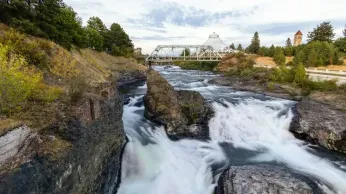
Part of Spokane’s appeal to travelers is that this emerging queer scene is layered onto a classic Inland Northwest backdrop. Visit Spokane promotes the city’s riverfront, trail systems, and proximity to lakes and ski areas as core draws, marketing the region as an accessible gateway to outdoor recreation. For LGBTQ+ visitors, that means nightlife is often bookended by hiking, biking, or strolling through Riverfront Park.
The combination of nature and urban culture mirrors a broader trend in queer travel. Guides from hotel and travel brands note that LGBTQ+ travelers increasingly seek destinations that offer both safety and “authentic” experiences—local food, arts, and outdoor access—rather than only nightlife-heavy districts. Spokane’s compact downtown, walkable core, and relatively lower costs compared with coastal hubs position it well in that niche, even if it remains far smaller than established queer meccas.
Several regional reports on LGBTQ+ demographics have pointed out that smaller cities and college towns in the U.S. West and Pacific Northwest have seen rising proportions of same-sex couples and openly LGBTQ+ residents over the past decade, though Spokane-specific statistics can be harder to isolate in national datasets. Researchers at the Williams Institute attribute some of this dispersion to housing costs, remote work, and shifting cultural attitudes that make it more viable for LGBTQ+ people to live outside a handful of major metros.
Spokane’s progress coexists with challenges that are familiar across the United States. Regional and national outlets have reported on anti-LGBTQ+ rhetoric and policy proposals in nearby states, including Idaho and Montana, prompting some residents to describe eastern Washington as both a refuge and a frontline. Local coverage has documented incidents of harassment and protests targeting LGBTQ+ events, including drag story hours, underscoring that increased visibility can also draw backlash.
Advocates in Spokane often emphasize that “LGBTQ-friendly” is a work in progress, not a finished label. Interviews in The Inlander with community organizers stress the importance of centering transgender people, queer people of color, and youth in conversations about safety and inclusion, especially as the city markets itself more actively to visitors.
For travelers, that nuance may be part of the draw. Spokane is not Provincetown or Palm Springs, both of which appear regularly on national lists of “gayest” or most LGBTQ-friendly destinations. Instead, it offers something quieter and more emergent: queer life threaded through a city still remaking its image, where the sight of a Pride flag in a shop window or a drag show advertised alongside a farmers’ market still feels like a small revelation.
For the traveler stepping off that once-ignored connection flight, the surprise may hit somewhere between the riverfront and a rainbow-lit marquee. Spokane, against expectation, has become a place where LGBTQ+ people can see themselves reflected in the festival banners, the bookstore shelves, and the bar lineups. In the evolving map of queer North America, this mid-sized railroad town is writing itself in ink.